İçeriğe atla
Dijiyon site yönetim yazılımı logosu

For residential complex and multi-building managements

Residential complex management software

Dijiyon residential complex management software brings block-based dues and expense allocation, parking and gate access, communal facilities and complex staff together in one panel. In a multi-block residential complex, the management board, block managers and accounting work in the same residential complex management system, with role-based permissions.

  • 10-day free trial
  • No credit card required
MANAGEMENTS
1,277+
UNITS
221,174+
USERS
327,480+
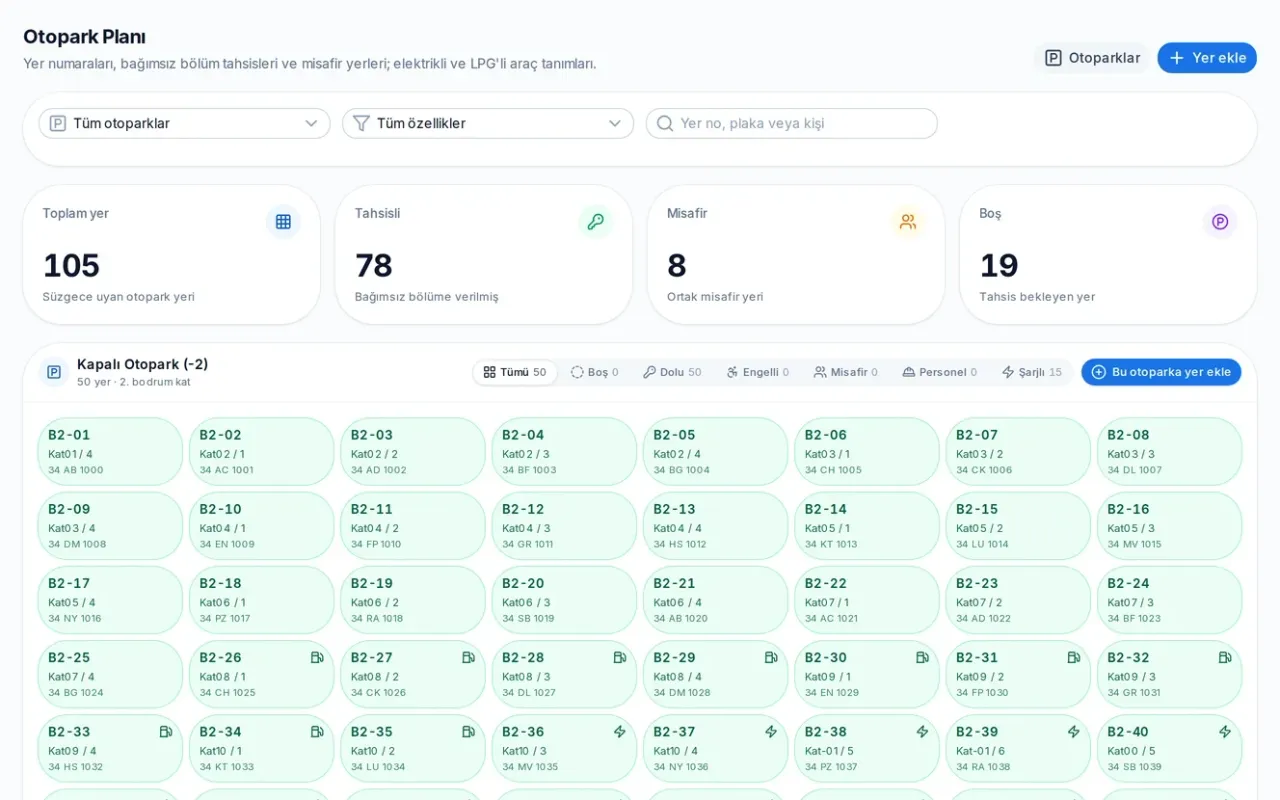
Residential complex management software car park plan screen: of 105 spaces, 78 allocated, 8 guest and 19 free; space numbers, unit allocations, plates and electric or LPG vehicle details

What can you do with Dijiyon residential complex management software?

Each heading below is a screen you actually open and use in the panel; they all come in a single package, with no invoice for extra modules or extra licences.

Layout plan and block-based invoicing

Blocks, floors and units are defined on the plan screen; owner, tenant and resident records are linked to this structure. Dues and shared expenses are invoiced by block, floor or unit, and income and expenses are tracked by block.

Explore the finance screens

Online collections and bank matching

Residents see their balance with the phone number registered in the system or their Turkish ID number and pay by credit card in instalments; the receipt is posted to the records instantly. Bank transactions are imported and matched to debts; with partner banks, matching is automatic.

Dues payment screen

Car park plan, vehicles and plate recognition

Parking spaces are planned by number and allocated to units; the vehicle list, charging stations and blocklist are on the same screen. It works integrated with partner plate recognition and barrier companies, and vehicle entries and exits appear in the panel.

Plate recognition system

Gates and access records

Complex entrances, block doors and barriers are defined with their name, direction and recognition method. Plate, card, remote, QR and intercom access events are recorded gate by gate.

Gates and site screens

Communal facilities and bookings

Areas such as the pool, gym and meeting room are opened up on a booking calendar. With product and service definitions, sales receipts are issued for paid use, payment is collected, and the income is posted to the accounts automatically.

Facility and communal area screens

Complex staff: timesheets, payroll and job adverts

Staff personnel records, timesheets, leave, advances and payroll are kept in the same module. When a position is vacant, you post a job advert from the panel; the advert is published on your management's website and in the residents' online portal, and applications arrive in the panel.

Human resources

Equipment, maintenance, work orders and suppliers

Equipment such as lifts, booster pumps and generators is linked to a maintenance calendar; faults and requests are tracked with work orders that include photos. In the supplier pool, the companies that managements in your area work with are listed by trade, province and district.

Supplier pool

General meetings, announcements and surveys

The attendance list, proxies, agenda and resolutions are kept in the system. You send an announcement to the whole complex or to a single block by SMS, WhatsApp and email, and see in the report who has read it; with surveys you gather residents' opinions.

Communication screens

What Is Residential Complex Management Software?

Residential complex management software (also called a residential complex management program) lets the management of a residential complex made up of several blocks run dues, expenses, staff, communal areas, parking and security from a single digital panel. What sets it apart from a single apartment building is that the work is layered: each block has its own expenses and flat owners, while areas such as the pool, gym, car park and landscaping are shared as a burden of the whole complex.

The Turkish Condominium Law (Kat Mülkiyeti Kanunu) regulates such developments separately as multi-building complexes: each block is managed by its block owners' meeting for its own common areas, while the complex's communal facilities are managed by the general meeting of owners of the complex or, if the management plan authorises it, by the complex's board of representatives. A single management plan is drawn up for the entire complex; it can be amended by the votes of two-thirds of the units represented by the members of the board of representatives. When this layered structure is tracked in a ledger book or a single Excel file, it is easy to lose track of which expense belongs to which block.

Dijiyon is cloud-based residential complex management software; it is used in a web browser without installing a program on a computer, and on a phone or tablet without any download. Blocks, floors and units are defined once; invoicing, collections and reports run on this layout, broken down by block. The staff, parking, facility and gate screens are in the same package; training and support are also included in the package.

The tasks a residential complex management deals with every month

The six problems we hear most often from managers of multi-block complexes, and how the software answers each one.

“Dues and expenses differ from block to block, and there are arguments about how much of the shared expenses falls on which block.”

Invoicing is broken down by block, floor and unit; shared expenses are distributed to blocks according to the allocation rule you define, and each block sees its own account separately.

“Complaints never stop about residents losing their parking space to someone else and about vehicles with unknown plates.”

In the car park plan, each space number is allocated to a unit and vehicles are recorded with their plates; guest and free spaces appear separately on the plan.

“There is no record of who came through the gates, and by which method.”

Each gate is defined with its name, type, direction and recognition method (plate, card, remote, QR, intercom); access events are reported gate by gate.

“Timesheets and payroll for the caretaker, security and gardening staff are kept by hand.”

Timesheets, leave, advances and payroll run in a single module; staff expenditure is matched with expenses, and the cost shows up in the reports.

“The use of the pool, gym and meeting room, and the fees for it, are not under control.”

With a booking calendar, paid use and sales receipts, the communal facility becomes a recorded operation; the income entry is created automatically.

“Lift, booster pump and generator maintenance gets forgotten, and faults grow.”

Maintenance dates for equipment are flagged in advance, overdue maintenance moves to the top of the agenda, and faults are assigned to the person responsible with a work order.

Residential complex management software pricing

Dijiyon has a single package: every screen on this page, from block-based invoicing to parking and from staff to communal facilities, comes in the same package; as the complex grows or a new need arises, there is no invoice for extra modules or extra licences. Training and support are also included in the package.

Before you decide, use the 10-day trial with your own complex's block and unit structure: no credit card is required and all features are unlocked. For a quote tailored to your complex, fill in the contact form; our expert team gets back to you the same day.

  • One package; no extra modules, extra licences or extra invoices
  • Training and support included
  • SMS credit bundle and a dedicated website for your management included
  • 10-day free trial; no credit card required, all features unlocked
  • Phone and in-panel support six days a week

Frequently asked questions about residential complex management software

What is residential complex management software?

Residential complex management software lets multi-block residential complexes run dues, shared expenses, staff, communal facilities, parking and gate access in a single digital panel. The account of each block and each unit is tracked separately, and the complex's management becomes transparent and auditable.

What is the difference between residential complex management software and apartment building management software?

An apartment building has a single building and a single account. A residential complex adds blocks, communal facilities, staff and parking; expenses must be separated by block, and gate and vehicle records, bookings and payroll are needed. In Dijiyon, both types of property are managed in the same package.

Can accounts be kept separately for each block?

Yes. Income and expenses are tracked by block, and shared expenses are distributed to blocks according to the allocation rule you define. In multi-building complexes, the Condominium Law also places the expenses of common areas allocated only to certain buildings on the flat owners in those buildings, and the expenses of facilities belonging to the whole complex on all flat owners.

Does it fit the structure of a board of representatives in a multi-building complex?

Under the law, unless the management plan provides otherwise, the complex's board of representatives consists of the block managers and the representatives of buildings that are not blocks, and each member casts as many votes as the number of units they represent. In the software, users are given role-based permissions; the attendance list, proxies, agenda and resolutions are kept in the system.

Does it integrate with plate recognition and barrier systems?

Yes. It works integrated with partner plate recognition and barrier companies; the connection key is issued from the panel, and vehicle entries and exits appear in the panel gate by gate.

Can fees be charged for the use of communal facilities?

Yes. Facilities and product and service definitions are set up, sales receipts are issued through bookings, and the income entry is created automatically. Facility usage rules and fees must be set in line with the management plan and general meeting resolutions.

Can payroll for complex staff be prepared in the software?

Yes. Staff personnel details, timesheets, leave, advances and payroll are kept in the human resources module; staff expenditure is matched with expenses. For new staff, you can post an advert from the panel and review candidates who have applied to managements in your area in the staff pool.

How are late-payment charges calculated?

Article 20 of the Condominium Law provides for a late-payment charge calculated at five percent per month for a flat owner who is late in paying their share of expenses and advances. In the software, you set the rate and the daily or monthly calculation method in the settings; the charge is applied automatically to every overdue debt.

Is it mandatory to appoint a manager in a residential complex?

The law makes appointing a manager mandatory in buildings with eight or more units; multi-block complexes are far above this threshold. In multi-building complexes, the block manager is appointed by the flat owners in the block, while the manager and auditor for the complex's communal facilities are appointed by the complex's board of representatives, unless the management plan provides otherwise.

How much does residential complex management software cost?

Dijiyon comes as a single package; there is no invoice for extra modules or extra licences, including the parking, staff and facility screens, and training and support are included. Just fill in the contact form for a quote tailored to your complex; we get back to you the same day.

Start free

Manage every block of your complex from one panel

More than 1,277 managements, more than 221,174 units and more than 327,480 users rely on Dijiyon. Open a free account; training and support are on us. If you manage a single apartment building, take a look at our apartment building management software page.

Call us